

Letter B Worksheet
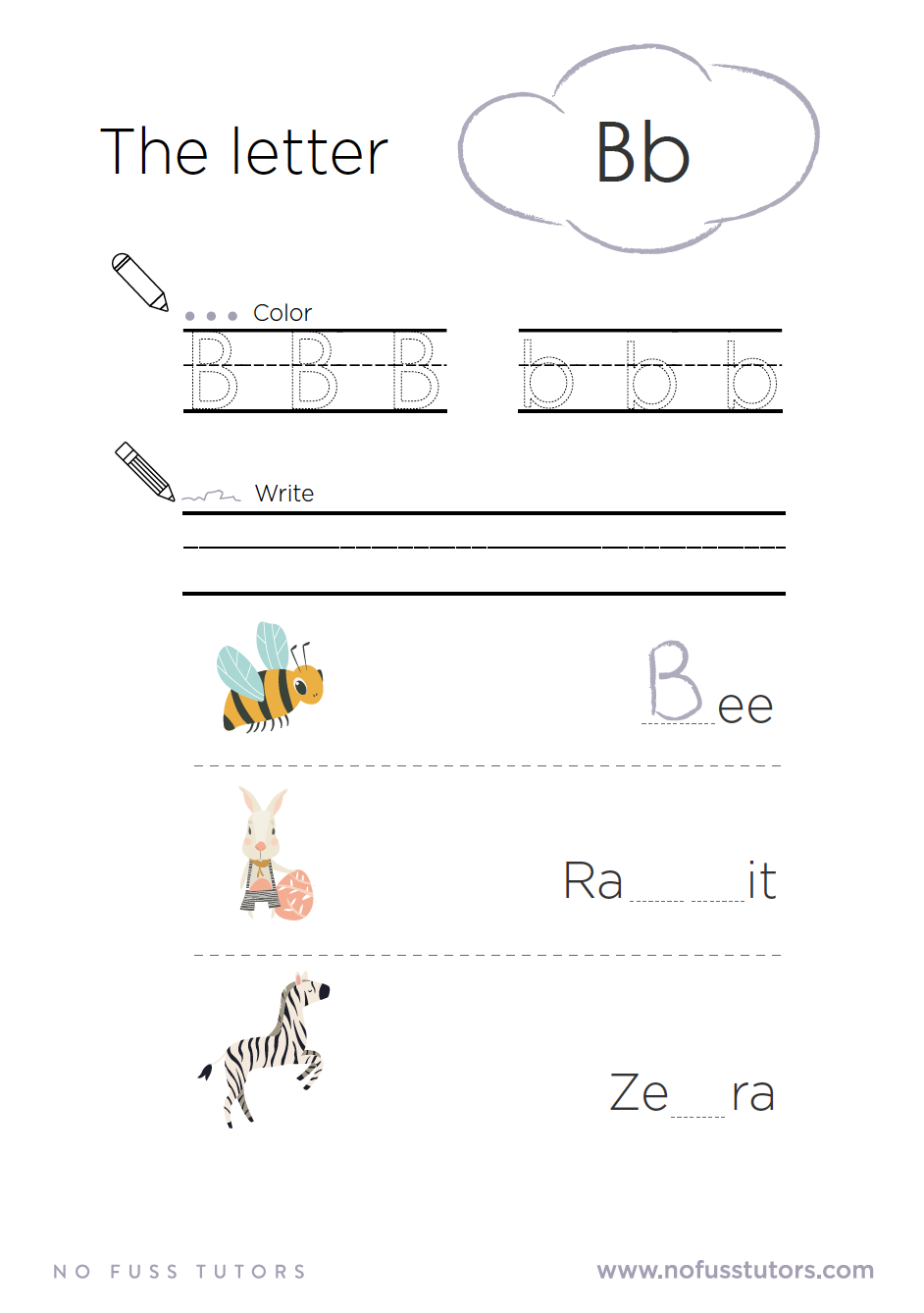
All about the letter B worksheet for the preschool level. Trace the letter B. Practice with printing both capital B and lower case b. As we're sure you know and why you are here, letter formation and identification of letters are the ultimate building blocks for learning how to read and write. B is obviously second in the alphabet and our recommendation is then not an obvious one, that you should work on this sheet second after working on the letter A worksheet.

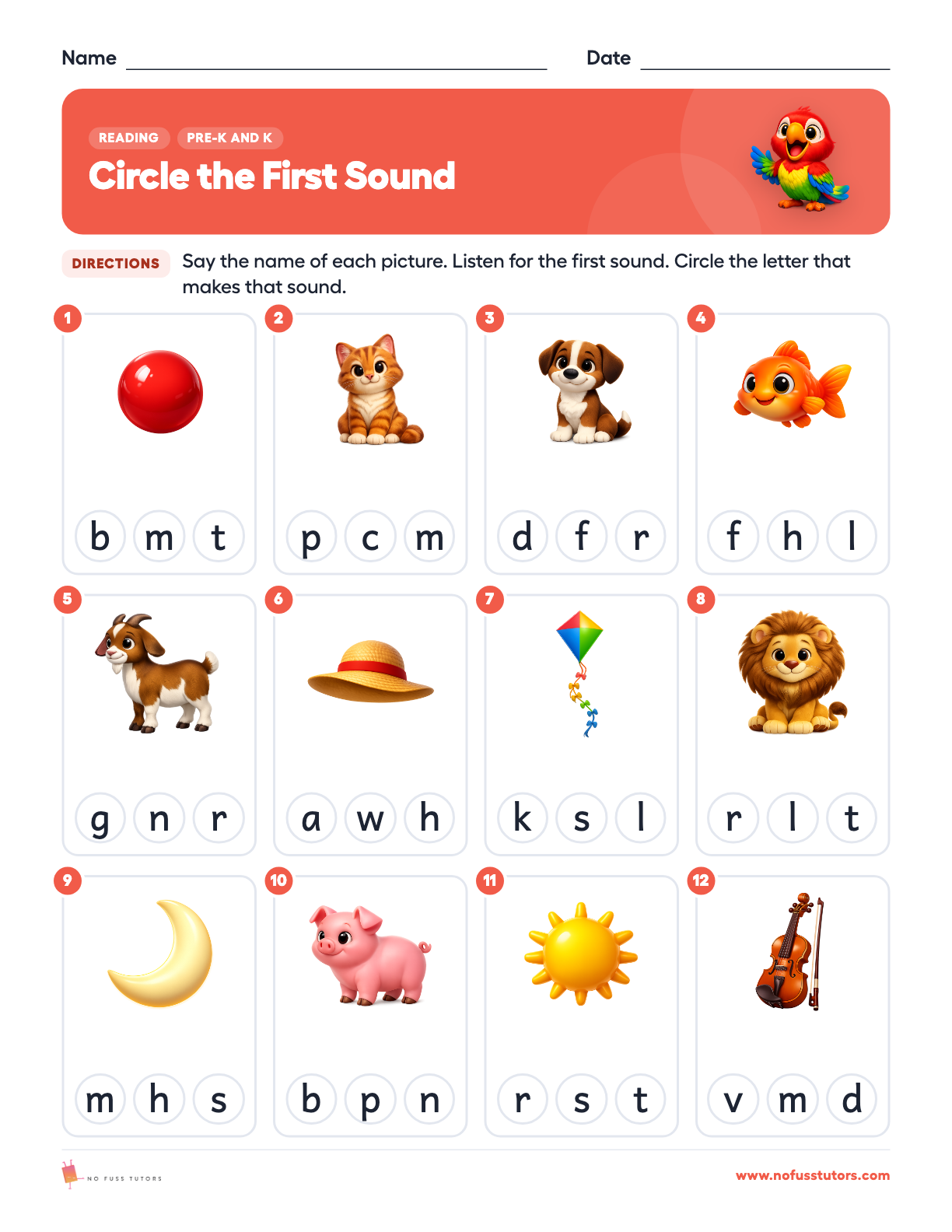

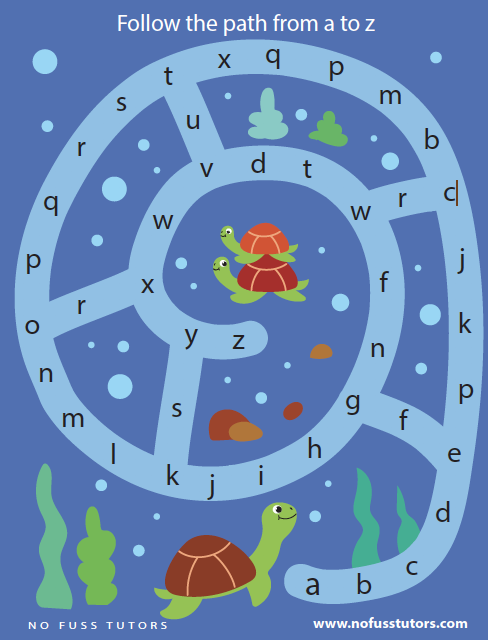


Letter ‘b’ Worksheets for Children
As adults, we might feel that alphabets are too easy to comprehend. We might expect our children to learn the a-b-c in a matter of days, but this is seldom the case. In fact, many toddlers find alphabets too tough to be understood quickly. An unintelligent, mundane teaching approach can make matters worse. This is why teaching the alphabet to toddlers deserves more effort than adults might think.
On top of that, the letter ‘b’ is one of the first few alphabets that your child learns to speak, write, and use in words. Nurturing a solid foundation of the letter b and what sound it represents is super important. With that in mind, the worksheets available on this page have been designed as parents’ and teachers’ perfect companions.
You will find coloring pages, exercises on tracing the letter ‘b’, worksheets on using the lower case ‘b’ and the upper case ‘B’, using it in different fonts, cutting and pasting activities, matching exercises, and much more. Make sure that your child has gone through a good number of worksheets on the letter ‘a’ beforehand because introducing letters randomly can do more harm than good.
If your child is doing well with alphabets and catching on faster than you expected, it is perfect to move on to further concepts. Teach him or her how to use ‘b’ in the middle or the end of a word, not just in the beginning. A good next step is to proceed on to teaching the child a few examples of words in which ‘b’ is silent, such as doubt, plumber, debt, etc. Kids find this anomaly to be amusing and explaining it to them can be quite fun.
On the other hand, if you think that your child is not fully grasping the concepts of the letter ‘b’, it is best to refrain from using words with a silent ‘b’ (like doubt) as it can confuse the child. This page is full of worksheets that will help your child play with sounds and enjoy learning from the very beginning. Many worksheets are so fun and simple, that your child can just grab their crayons and get started!
Teaching the Pronunciation of Letter ‘b’ to Kids
Alphabet knowledge must begin by teaching your child how to utter the letter ‘b’. Press your lips and then push the air out from your mouth by moving your lips apart. Very slowly, do this once or twice to help your child understand the pronunciation. Begin with short words - two or three letters long.
Kids also feel more comfortable around names, so teaching the sound of ‘b’ by using the names of family members or your child’s playmates is also a good idea. Showing your child pronunciation videos and songs on alphabets from Youtube every day also works great. Videos from the internet are also useful for teaching the difference between cursive and print styles of writing alphabets. At the same time, do make sure that your child is not getting too attached to gadgets - nothing can replace the pen and paper approach!
Lastly, remember that children pick up words from almost anywhere – what they see on the TV, what they hear on the radio, and what their parents and family members speak. So, even when you say simple words like ‘bed’, ‘big’, ‘ball’, and ‘baby’, lay emphasis on the ‘b’ to help your child memorize the sound and the usage of the alphabet. Trying some phonic worksheets with your toddler is also an effective approach.
Why is Alphabet Knowledge Important?
Nurturing alphabet knowledge in toddlers is one of the main pillars of early literacy. It isn’t something that educators experimented with and was coincidentally found to be useful – early literacy is scientifically backed and as an increasing number of studies and researches are coming out in favor of it, early literacy is gaining momentum. In other words, the significance of alphabet knowledge is flaring up.
Every parent and teacher knows the value of being able to read. It opens the door to education and without reading skills, one can not study any subject at all. Learning the alphabet is a stepping stone to reading. A better understanding of letters and phonics directly implies fluency in reading. Delaying literacy can not only hinder a child’s capability to read but can even lead to learning disabilities, like dyslexia.
The Right Time to Begin Alphabet Worksheets
The moment when you notice that your toddler is not merely uttering words but is also developing a sense for remembering names, it is a good idea to start introducing alphabets. Paste some a-b-c charts in your child’s bedroom and let them get acquainted with the letters. Gradually begin narrating the alphabet to the child – quite similar to how you taught your baby the first ‘mama’ and ‘papa’ they ever spoke.
If your toddler is able to identify at least ten distinct alphabets before entering kindergarten, it is a satisfactory demonstration of alphabetical awareness. The child is certainly on the right track. However, if the child enters kindergarten with no permanent alphabet knowledge imprinted in the memory, it can be a reason for worry. If the child fails to learn all the 26 alphabets by the end of kindergarten, it may be the indication of an underlying learning disability.
Benefits of Solving Worksheets with Young Children
Promoting early literacy can be tough because there is only so much that you can burden a child with. Child-friendly worksheets that are colorful and easy to follow, are hence the best option available to teachers and parents. They are suitable not only for first-time learners in preschool and kindergarten but also for children beginning their first grade, who want to revisit phonics and alphabet usage. Alphabet worksheets are also a great medium for getting more writing practice and hence developing neat handwriting.
In addition to using worksheets for teaching alphabets to toddlers, parents can also try to:
- Use flashcards: Show your kids an alphabet written on a flashcard and ask them to name it. If your child has only recently learned the alphabet, try using images as hints – an apple next to the ‘a’, a ball next to the ‘b’, and so on.
- Use reinforcements: Paste large-size printouts of alphabet charts showing letters in lower case, upper case, and with relevant image hints for each letter, at different places in the house. Repetitively viewing the charts can boost retention in children faster than you’d expect. Using rhymes and speaking out letters with your child can also go a long way.
Not all parents precisely know how to proceed with alphabet education – and that’s okay! Various easily-accessible resources like the letter b worksheets on this page are a good place to start and can be a useful guide.