

You ask your child to write three sentences about their weekend. Twenty minutes later, there is one sentence, a lot of eraser marks, and a child who is sure they hate writing.
Writing is one of the hardest things we ask children to do. They have to come up with ideas, organize them, remember how to spell each word, form every letter by hand, and keep track of capital letters and periods, all at the same time. When any one of those parts is hard, the whole task can feel overwhelming.
The first step to helping is figuring out which part is getting in the way.
Why some kids hate writing
Handwriting is slow or tiring
If forming letters takes a lot of effort, a child has little energy left for ideas. Watch your child write. Do they grip the pencil very tightly, press hard, complain that their hand hurts, or write much more slowly than classmates? Handwriting may be the bottleneck.
Spelling is hard
Children who struggle to spell often choose simple words they know how to spell instead of the words they really want to use. Some avoid writing altogether because they do not want to make mistakes. Spelling difficulties are often connected to reading and phonics gaps.
They do not know what to say
A blank page is intimidating. Some children have plenty of ideas when they talk but freeze when asked to write them down. Others have trouble deciding what to write about or how to start.
They do not know how to organize ideas
Older children may have lots to say but no idea how to put it in order. Their writing comes out as one long sentence, or jumps from idea to idea.
Past experiences have been negative
A page covered in red corrections, or being told their writing is messy, can make a child decide writing is not for them. Avoidance is often a way of protecting themselves from feeling bad.


9 practical ways to help a child who hates writing
1. Separate thinking from writing
Before your child writes anything, have them tell you what they want to say. Ask questions and let them talk it through. Some children benefit from saying each sentence out loud before writing it down. This lets them focus on ideas first, then on getting the words on paper.
2. Try being their scribe
Now and then, let your child tell you their story while you write or type it. This shows them they do have good ideas and lets them experience writing without the physical struggle. It is not cheating. It is practicing a different part of writing.
3. Start very small
Instead of a full page, ask for one great sentence. Then two. Short, successful writing builds confidence much faster than long assignments that end in tears. Lists, captions, labels and notes all count as writing.
4. Make it meaningful
Children write more willingly when the writing has a real purpose. Try a grocery list, a letter to a grandparent, a review of a movie, instructions for a game they invented, or a comic strip. Let them write about the things they love, whether that is dinosaurs, soccer or video games.
5. Build handwriting a few minutes at a time
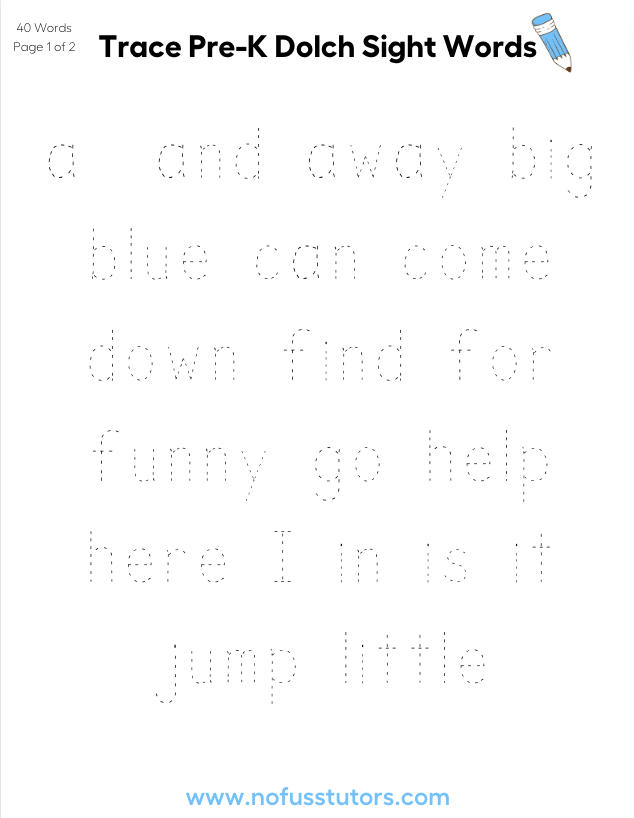
If handwriting is the problem, practice it separately from creative writing, in short daily sessions. Focus on forming letters the same way each time. Fun activities like play dough, tweezers, coloring and drawing also build hand strength. Our printing worksheets give structured letter practice.
If your child's handwriting is very hard to read, they complain of pain, or they are much slower than peers despite practice, mention it to their teacher or doctor. They may suggest an evaluation by an occupational therapist or another specialist.
6. Do not correct everything
When your child shares writing with you, start with what is good: an interesting word, a funny idea, a strong ending. Then choose just one thing to work on, like capital letters at the start of sentences. Correcting every error at once teaches a child that writing equals failure.
7. Separate spelling practice from writing
Tell your child that when they are writing a first draft, it is fine to spell words the best they can and fix them later. Then practice spelling in its own short sessions, using sound-by-sound strategies. Our article on how to help your child with spelling has nine practical tips.
8. Give them a structure
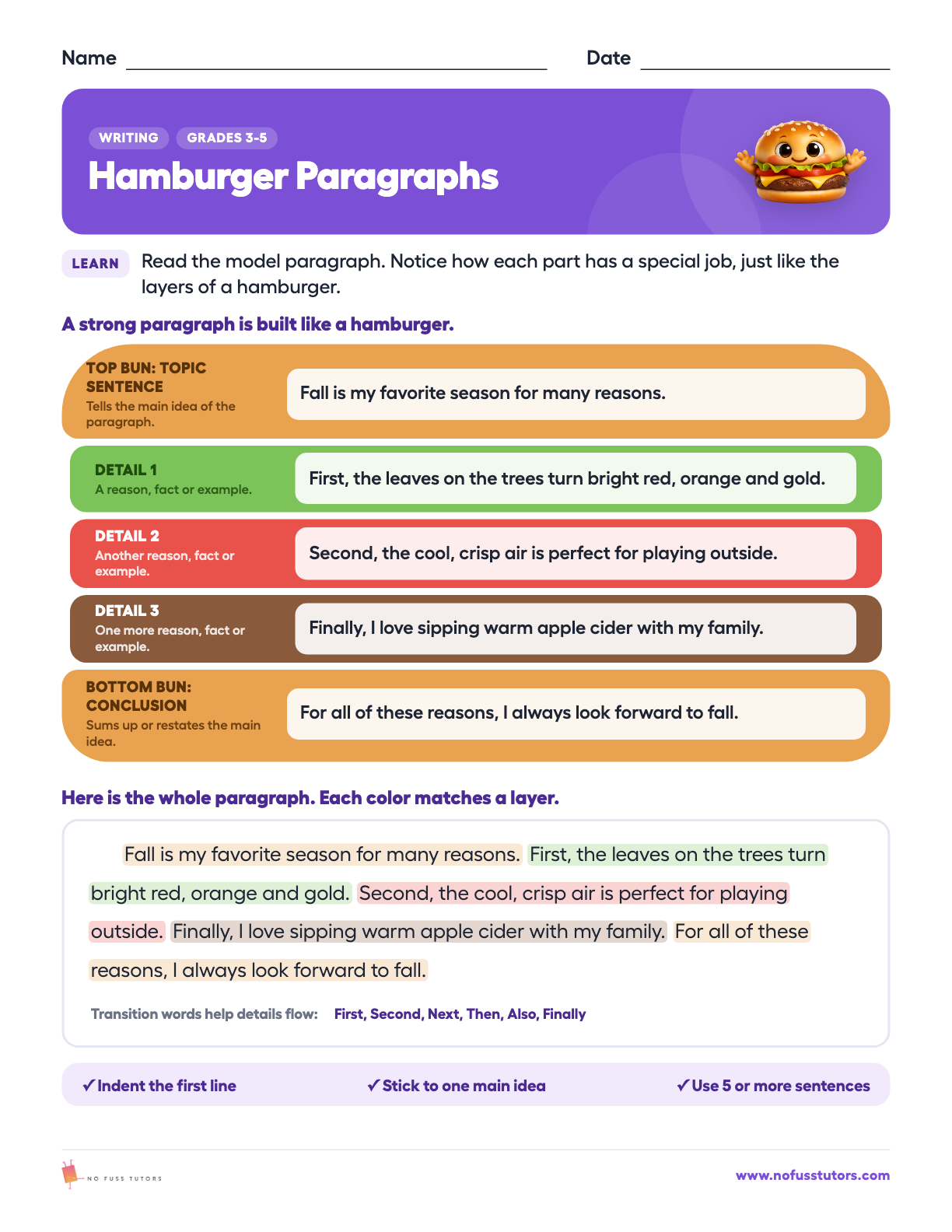
Simple frames make writing much less intimidating. For a story: who, where, what went wrong, how it got fixed. For an opinion: what I think, reason one, reason two, conclusion. Sentence starters like "First," "Next" and "In the end" help children organize ideas. Graphic organizers work well too.
9. Try a keyboard
For some children, typing removes the handwriting barrier and lets their ideas flow. Typing does not replace handwriting practice, but it can be a great way to get a reluctant writer producing longer pieces.
Read together to build better writers
Children who read and listen to lots of stories absorb how good writing sounds. Read aloud regularly and talk about what the author did: "I love how they described the storm," or "This ending surprised me." Reading gives children vocabulary, sentence patterns and story ideas they can use in their own writing.
Writing activities to try this week
- Write a silly story together, taking turns adding one sentence each.
- Keep a shared notebook where you write each other short notes.
- Make a comic strip with speech bubbles.
- Write a list of the top five best things about their favorite animal.
- Use picture prompts from our writing worksheets and creative writing worksheets.
When to get extra help
If your child continues to avoid writing despite your efforts, falls behind their grade in writing, or struggles with reading and spelling as well, extra support can help. Writing difficulties are often linked to reading and spelling gaps, so it is worth looking at all three together.
No Fuss Tutors offers 1-on-1 live online writing tutoring for kids across the US and Canada. On a video call with a colorful interactive whiteboard, tutors help children plan, write and revise step by step, building skills and confidence along the way. If spelling and reading are part of the problem, our online reading tutors can strengthen those foundations too.
Frequently asked questions
Why does my child hate writing so much?
Usually because one part of writing is hard for them, such as handwriting, spelling, coming up with ideas or organizing them. When one part takes a lot of effort, the whole task feels overwhelming. Figuring out which part is hard is the first step to helping.
Is it okay to let my child type instead of write by hand?
Typing can be a great tool for getting ideas down, especially for children who find handwriting hard. It is still worth practicing handwriting separately in short sessions, since children need it at school.
Should I correct my child's spelling when they write?
Not during a first draft. Let your child get their ideas down, then pick one or two words to fix together. Practice spelling separately so writing time stays focused on ideas.
Can a tutor help a reluctant writer?
Yes. A 1-on-1 tutor can find out which part of writing is hard for your child, teach strategies for that part, and build confidence with short, successful writing tasks.


