

Math has a way of sneaking up on families. One year your child is fine, and the next they are coming home with low test scores, unfinished homework and a new habit of saying "I hate math."
Because math builds on itself so heavily, small gaps can turn into big problems quickly. Here are nine signs your child could use a math tutor, a few ways to help at home, and what good math tutoring looks like.
Why math gaps grow so fast
Math is like a staircase. Addition supports multiplication. Multiplication supports division and fractions. Fractions support algebra. If one step is missing, every step after it feels shaky.
That is why a child who struggled a little with place value in second grade can suddenly hit a wall with long division in fourth grade. The new topic is not really the problem. The missing step underneath it is.
9 signs your child may need a math tutor
1. Their grades are dropping
A slide in math grades, especially over more than one report card, is the most obvious sign. Look at tests and quizzes, not just the final grade, to see which topics are causing trouble.
2. They still count on their fingers for basic facts
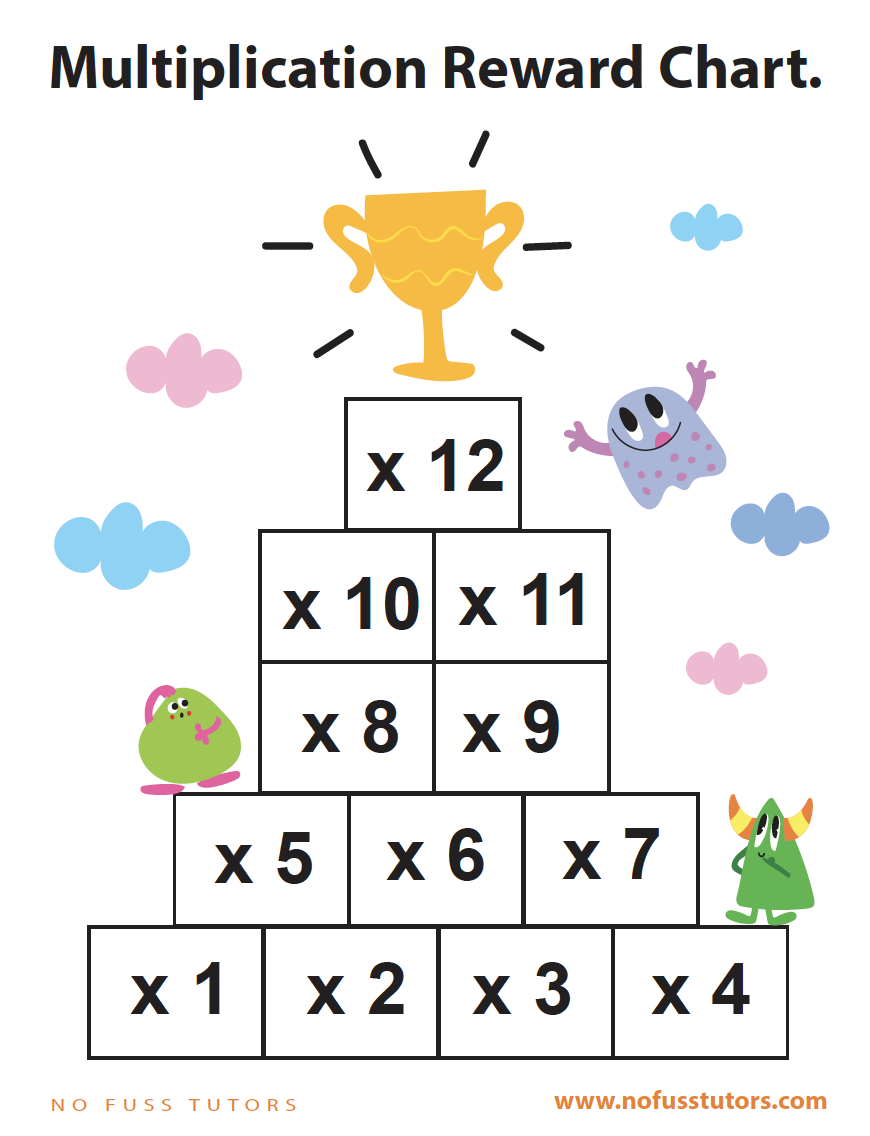
Counting on fingers is perfectly normal when children are first learning to add. But if an older child still needs to count to solve 7 + 5 or work out 6 x 4 from scratch, everything else in math takes much longer. Quick recall of basic facts frees up brain power for harder problems. A multiplication chart and daily practice can help.
3. Homework takes far too long
If a math sheet that should take 20 minutes takes an hour, or your child cannot start without you sitting next to them, they likely do not understand the concepts well enough to work on their own.
4. They follow steps but cannot explain why
Some children memorize procedures without understanding them. They can do problems that look exactly like the example, but fall apart when a question is worded differently. Ask your child to explain how they got an answer. If they cannot, their understanding may be fragile.
5. Word problems are a wall
Word problems require children to read carefully, figure out what is being asked, and choose the right operation. If your child can do the calculations but freezes on word problems, they need help with problem solving. Sometimes this is also a reading issue, so it is worth checking both.



6. They say "I'm just not a math person"
Children who repeatedly struggle often decide they are not good at math, and then stop trying. Math confidence is closely tied to math success. A patient tutor who helps your child experience regular wins can change how they see themselves.
7. They get anxious about math
Stomach aches before math tests, tears over homework, or freezing up during timed quizzes can all be signs of math anxiety. Anxiety makes it harder to think clearly, which makes performance worse, which makes anxiety worse. Breaking that cycle often takes calm, 1-on-1 support.
8. The teacher has raised concerns
Teachers see your child alongside many others the same age. If a teacher mentions that your child is struggling, missing foundational skills or not keeping up, take it as a valuable early warning.
9. You cannot help the way you would like
Math is often taught differently than when parents went to school, and helping can lead to frustration on both sides. Many families also simply do not have the time each evening. A tutor can take on the teaching so your evenings are calmer.
Ways to help with math at home
Whether or not you hire a tutor, these simple habits make a real difference:
Practice facts for a few minutes a day
Five minutes of addition, subtraction or multiplication facts each day, with flashcards, a quick game or a worksheet, builds fluency over time. Focus on a small set of facts at once and mix in ones they already know. Our math worksheets are organized by grade and topic, and our multiplication worksheets are great for times tables.
Use real objects
Coins, blocks, measuring cups and pizza slices make abstract ideas concrete. Splitting a pizza into eighths explains fractions better than a page of diagrams.
Talk about math in daily life
Ask your child to figure out how much change you will get, how long until dinner, or how many apples you need if each person gets two. Everyday math shows children that numbers are useful and builds number sense.
Ask them to explain
When your child solves a problem, ask, "How did you figure that out?" Explaining their thinking strengthens understanding and helps you spot misunderstandings.
Watch your own words
Try not to say "I was bad at math too." Children pick up on our attitudes. Instead, talk about math as something everyone gets better at with practice.
For more ideas, read our article for parents whose kid is falling behind in math.
What a good math tutor does
- Finds the gaps. A good tutor checks earlier skills, not just the current homework, to find the missing steps.
- Builds understanding, not just procedures. Your child should learn why a method works, using drawings, models and real examples.
- Fills gaps while supporting current schoolwork, so your child can keep up in class while they catch up.
- Builds confidence with problems that are challenging but achievable.
- Keeps you informed about progress.
How No Fuss Tutors can help
No Fuss Tutors offers 1-on-1 live online math tutoring for kids across the US and Canada. Lessons happen on a video call with a colorful interactive whiteboard, where your child and tutor can draw, model and solve problems together.
Our tutors range from Certified Teachers to subject experts with professional tutoring experience, and your child can keep the same tutor every lesson. Lessons are sold in packages of 12, and we recommend 3 lessons a week for children who are catching up.
Frequently asked questions
At what age should a child get a math tutor?
Any age where a gap is starting to form. Younger children benefit from building strong number sense early, and older students benefit from filling gaps before new topics like fractions and algebra build on them.
Is it normal for kids to count on their fingers?
Yes, especially when children are first learning to add and subtract. Over time, most children move toward recalling basic facts quickly. If an older child still relies on counting for simple facts, regular fact practice can help.
How much does an online math tutor cost at No Fuss Tutors?
For JK to Grade 8, lessons are $30 USD per 45 minute session. For high school, lessons are $40 USD per 1 hour session. Lessons come in packages of 12, and a second child gets a 10% discount.
Can a tutor help with math anxiety?
A patient 1-on-1 tutor can help a lot. Working at the right level, without the pressure of classmates watching, helps children experience success and rebuild confidence over time.


