

Phonics is the skill of matching sounds to letters so a child can sound out written words. It is the foundation of reading, and the good news is that you can teach a lot of it at home with nothing more than paper, a pencil and 10 minutes a day.
This guide walks you through phonics in the order most structured programs teach it, with simple activities for each step. You do not need to be a teacher. You just need to be consistent.
Before you start: a few ground rules
Keep sessions short
Ten to fifteen minutes a day works better than an hour on Saturday. Young children learn through frequent repetition, and short sessions end before anyone gets frustrated.
Say pure sounds
When you say a letter sound, keep it short and clean. The letter m says "mmm," not "muh." The letter s says "sss," not "suh." Adding an extra "uh" to every sound makes blending much harder, because "muh-a-tuh" does not sound like mat.
Teach in order, and review constantly
Phonics works best when it is taught systematically, one step at a time, with lots of review. Do not rush to the next step until the current one feels easy. Going back over old sounds is not wasted time. It is how skills become automatic.
Do not teach guessing
Encourage your child to look at every letter and sound out the word, rather than guessing from the picture or the first letter. Covering the picture while they read a sentence can help.
Step 1: Play with sounds out loud
Before letters, children need to hear the separate sounds in words. This is called phonemic awareness, and you can practice it anywhere.
- I spy with sounds: "I spy something that starts with /b/." (Ball, book, bed.)
- Rhyme time: "What rhymes with cat?" Silly made-up words count too.
- Robot talk: say a word in separate sounds, like /d/ /o/ /g/, and have your child say the word.
- Break it up: you say a short word and your child tells you each sound.
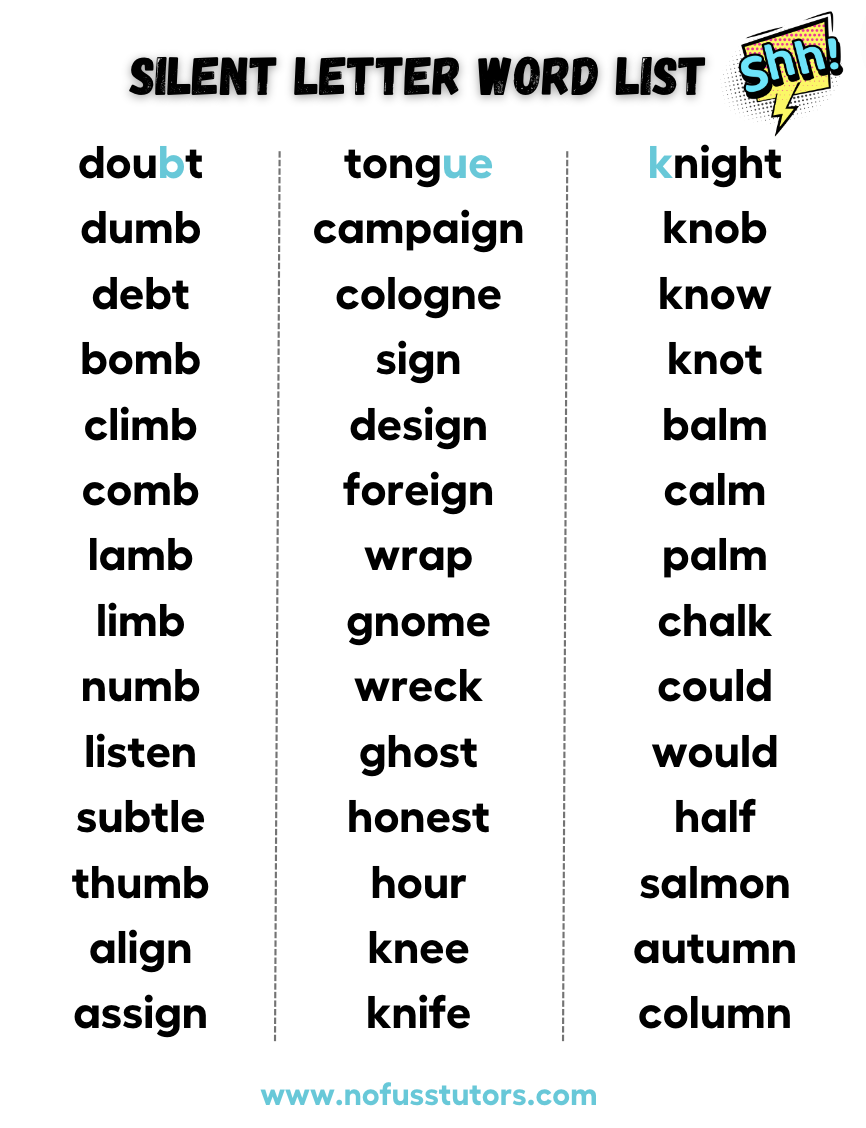

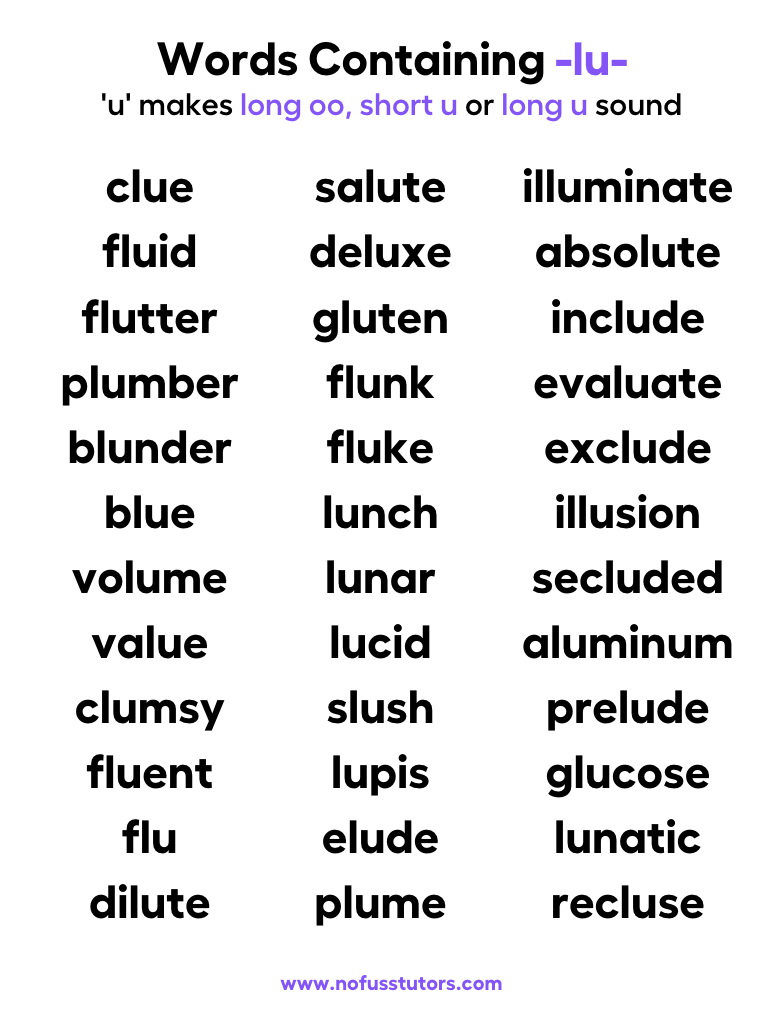
If your child finds this hard, spend extra time here. It is the most common hidden gap in children who struggle with reading. Our phonemic awareness worksheets give you more activities.
Step 2: Teach letter sounds
Children need to know the sound each letter makes, not just its name. Many programs start with a small group of letters that can make lots of words quickly, such as s, a, t, p, i and n. With just those six letters, your child can read words like sat, pin, tap and pan.
Introduce two or three new sounds at a time. Write each letter on a card. Say the sound, have your child repeat it, and have them trace or write the letter while saying the sound. Mix new cards in with ones they already know and review every day. Our alphabet worksheets are useful for letter formation practice.
Step 3: Blend sounds into words
Blending is the moment a child goes from knowing sounds to actually reading. Start with three-letter words that follow the consonant, vowel, consonant pattern, often called CVC words, like sun, map and big.
Try this routine:
- Write the word in large letters.
- Your child touches each letter and says its sound: /s/ /u/ /n/.
- They slide a finger under the whole word and say the sounds again, faster.
- Repeat until the sounds join into a word they recognize: sun!
Some children find it easier to stretch continuous sounds together, like "sssuuunnn," without stopping between them. Once they can blend, make word chains by changing one letter at a time: sun, sin, pin, pan, pat. Word chains force your child to look carefully at every letter.
Step 4: Segment words for spelling
Segmenting is blending in reverse. You say a word and your child breaks it into sounds, then writes a letter for each sound. Draw three boxes on paper and have your child push a coin or counter into one box for each sound they hear, then write the letters in the boxes.
Practicing reading and spelling together helps both skills grow faster, because they use the same knowledge.
Step 5: Add consonant blends and digraphs
Once your child can read CVC words with ease, move on to:
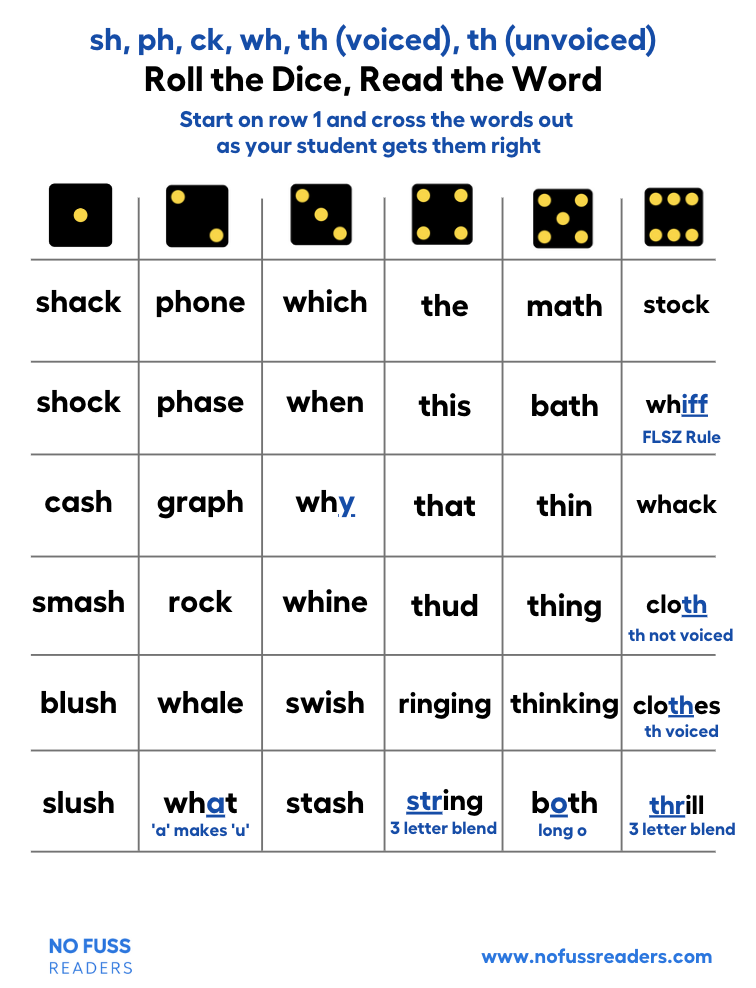
- Digraphs: two letters that make one sound, like sh, ch, th and ck (ship, chip, thin, duck).
- Consonant blends: two or three consonants where you can still hear each sound, like st, fl, gr and spl (stop, flag, grin, split).
Teach these one at a time with the same blending routine. Our article on what blends are explains the difference in more detail and has examples to practice.
Step 6: Long vowels and vowel teams
Next come patterns where vowels say their names. Common ones include silent e (cake, bike, home) and vowel teams like ee, ai, oa and igh (feet, rain, boat, light). Introduce one pattern at a time, practice reading and spelling words with it, then read sentences and short books that use it.
Step 7: Read decodable books
Decodable books are written mostly with the sound patterns your child has learned. They give your child a chance to use phonics in real reading, without needing to guess. Have your child read a decodable book two or three times over a few days. The first read builds accuracy, and rereading builds fluency.
You can print free decodable books from our worksheet library, along with hundreds of phonics worksheets organized by skill.
What about sight words?
Some very common words have spellings that do not follow the patterns your child has learned yet, like said, was and of. Teach these a few at a time by sounding out the regular parts and pointing out the tricky part. Our guide to teaching sight words the right way walks you through it.
A sample 10-minute phonics session
- Two minutes: quick sound game out loud, like robot talk.
- Two minutes: flip through letter sound cards, including two new ones.
- Three minutes: blend five words on paper or a whiteboard.
- Two minutes: spell two or three words using sound boxes.
- One minute: read one sentence together and celebrate.
When to get help
If your child has been practicing regularly for several weeks and still cannot remember letter sounds, cannot blend simple words, or is becoming upset about reading, it may be time for extra support. Talk to their teacher, and consider a tutor who teaches phonics systematically.
No Fuss Tutors offers 1-on-1 online phonics tutoring for kids across the US and Canada, on a live video call with a colorful interactive whiteboard. Our Reading Boost Program is grounded in the Science of Reading. For our youngest learners, our kindergarten reading tutors make early phonics playful and fun.
Frequently asked questions
What age should I start teaching phonics at home?
Many children are ready for sound games around age 3 or 4 and letter sounds around age 4 or 5, but every child is different. Follow your child's interest, keep it playful, and stop if they are not enjoying it.
Should I teach letter names or letter sounds first?
Both are useful, but letter sounds are what children need for reading. Many parents teach them side by side. When you are reading together, focus on the sound the letter makes.
My child knows all the letter sounds but cannot blend. What should I do?
This is very common. Go back to oral blending games without letters, then practice with words that start with sounds you can stretch, like m, s and f. Have your child hold each sound without stopping, like "mmmaaap," until they hear the word.
How long does it take to learn phonics?
Most children learn the core phonics patterns over the first few years of school. The pace depends on the child and how often they practice. Short, daily practice helps much more than occasional long sessions.


